
API backward compatibility testing before a provider deploy
A release matrix and worked example for checking whether an updated API still serves deployed clients, including contract, behavior, rollout and rollback evidence.
Rainier Software Solutions
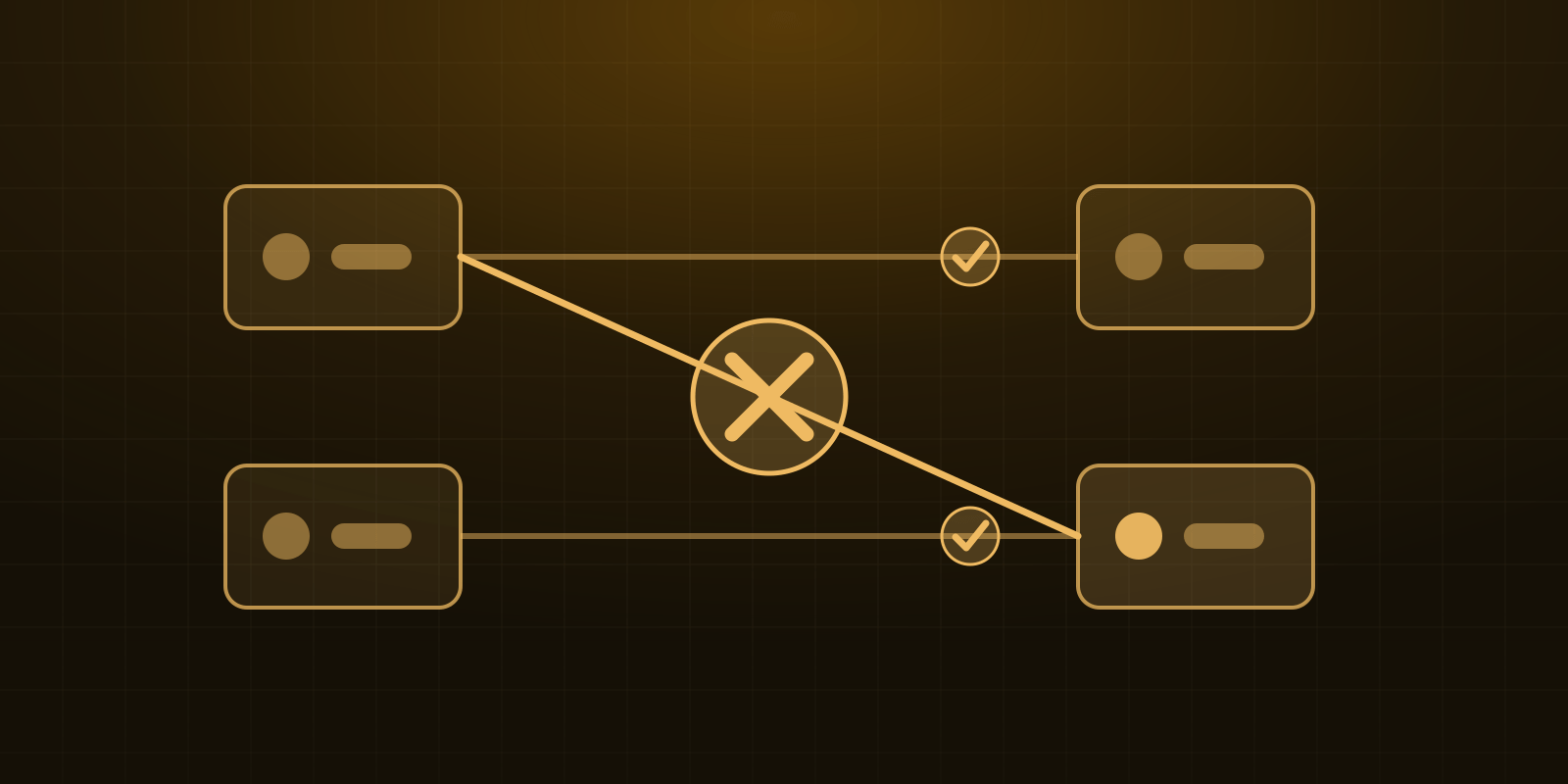
Before accepting an API update, run the client versions that are still deployed against the proposed provider build. Check the requests they send, the responses they consume, and the business behavior they rely on. A changed schema can be easy to spot; a changed default, status meaning, or error path can break a client without changing a field name. The release decision should name which client and provider combinations must work during rollout and rollback.
This guide is for an engineering lead or prime contractor accepting an application programming interface (API) work package from a delivery team. It supplies a review method and a fictional example, not test results from a Rainier client.
Which combinations must still work?
An API provider is the service answering requests. A consumer is an application or service calling it. Identify the versions actually running, including partner clients that the provider team cannot update on demand. Microsoft's API design guidance notes that providers control their own API but may not control partner applications consuming it.
Use a deployment matrix before writing tests. The rows below are proposed review gates; remove a combination only when the rollout plan proves it cannot occur.
| Consumer | Provider | Why test it | Release decision |
|---|---|---|---|
| Current deployed client | Current provider | Establish a working baseline and preserve the fixture. | Record the known behavior. |
| Current deployed client | Candidate provider | Detect a provider change that breaks existing users or partners. | Required before provider rollout. |
| Candidate client | Current provider | Check a client-first rollout or provider rollback. | Required if either state can occur. |
| Candidate client | Candidate provider | Verify the intended new behavior. | Required, but insufficient alone. |
A green candidate-with-candidate test does not establish backward compatibility. Record the oldest supported client, its version or build, and who owns it. If an external partner cannot supply a runnable client, agree on a contract fixture and a follow-up integration check rather than silently marking the combination passed.
Worked example: a response rename breaks a deployed client
Assume a hypothetical scheduling portal has a deployed client that calls GET /assignments/42 and reads status. The proposed provider renames that field to state, while the new client understands only state:
{ "id": 42, "status": "assigned" }
{ "id": 42, "state": "allocated" }
The candidate provider and candidate client might work together. The deployed client can no longer read its expected field. This is a breaking change even if the HTTP status remains 200. A safer staged design might keep status with its documented meaning for supported clients while adding a new field or separately versioning the response. Microsoft's API guidance distinguishes potentially additive response fields from field removal or renaming, and its implementation guidance recommends preserving contracts of supported versions when introducing a breaking one.
Do not assume an added field is harmless for every consumer. Test a strict parser or generated client that rejects unknown fields. Likewise, changing an optional request field to required can reject a still-deployed caller even when responses look identical. These are compatibility questions about the actual consumers, not labels assigned to a schema diff.
Rainier's published Vennli engagement describes a flight scheduling portal with a Python domain model and a React interface. It does not describe the fictional endpoint, versions, or tests above. The example uses that kind of workflow only to make a consumer-visible state change concrete.
Build the acceptance fixture from consumer behavior
For each supported consumer, capture representative requests and the assertions that matter to it. Use synthetic or redacted records. A provider schema or OpenAPI diff can identify possible breaks, but it cannot prove that every affected client still performs its workflow. Pact's documentation likewise distinguishes contract checks from tests of core business logic.
| Change to probe | Current-client test | Evidence to retain |
|---|---|---|
| Removed or renamed response field | Run the current parser and screen against the candidate response. | Parsed value and visible state, not only a 200. |
| New required request field | Replay an unchanged current-client request. | Accepted or rejected request and documented default. |
| New response value | Feed the new value to the current client. | Whether it handles, displays, or rejects it safely. |
| Changed error or empty result | Exercise an absent record and a denied request. | Client recovery path and provider response. |
| Changed pagination or ordering | Traverse more than one page with a stable fixture. | Items seen once, omitted, or repeated. |
| Changed authentication boundary | Use authorized and unauthorized test identities. | Access decision plus unchanged protected state. |
The rows are an engineering review proposal, not a universal API standard. Select cases based on the interface and the consumer's real code. For each test, record provider revision, consumer revision, fixture, environment, expected behavior, observed behavior, and owner of any gap.
Plan rollout and rollback as part of compatibility
If the provider changes first, keep the current client working until its replacement is deployed. If the client can change first, check that it still works with the current provider. A rollback can recreate an older combination hours after the happy-path test, so keep the corresponding matrix row valid through the rollback window.
For a breaking change, use a separately identified API version or an agreed staged migration. Microsoft's implementation guidance calls for consistent version routing, documented behavior for omitted version identifiers, and continued support for earlier versions. Pact describes an expand-and-contract sequence: add the new field, migrate consumers, then remove the old field after verification. Neither source sets your support deadline; agree that with the consumers and the work package owner.
A contract test can help verify that a provider still satisfies a known consumer expectation. Where a team uses Pact, its provider verification results can support a deployment decision for the versions actually involved. Still exercise at least one end-to-end workflow for business behavior and dependencies outside the contract. A passing mock interaction does not prove the production consumer is on the version you think it is.
What belongs in the handover decision?
The receiving team should be able to answer: which consumers were identified, which combinations were tested, which were intentionally excluded, when the old contract may be retired, and how to roll back without stranding a client. Record that in a short release note with links to the runnable fixtures and results. Treat an unknown partner version as an unresolved dependency, not as a passing result.
The software subcontractor acceptance checklist places this evidence beside integration ownership and operational handover. If a new API path also changes write retries, use the separate retry and idempotency test matrix; backward compatibility alone does not establish that duplicate operations are safe. Rainier's software subcontracting scope covers bounded application and API work packages. Bring the provider change, known consumers, release order, and rollback window to a scoping discussion.
- Software Delivery
Rainier Software Solutions
Principal-led software engineering for federal and state missions. Secure, scalable, audit-ready.
About Rainier